Man, mission, me

The project shipped on the date everyone had circled. There was a launch channel, a round of congratulations, a line in the next business review with my name near the top of it. By every measure the organization used to decide such things, it was a success.
A quarter later, two of the strongest engineers had left, a third had asked to move, and the people who stayed talked about the project the way you talk about an illness you have recovered from. We had delivered the thing. We had spent the team to do it, and nobody had put that cost on the same slide as the win.
This was several years ago, and I have turned it over many times since, because by the measures we used it still counts as a success. I keep arriving at the same answer: we had the right goals, we just had them in the wrong order.
An old ordering of priorities
There is an ordering of a leader’s priorities that I keep coming back to: man, mission, me. I learned it from James Broadhead, a mentor from earlier in my career, who had taken it in turn from the military, where it had been worn smooth by long repetition. He told me even then that the wording was of its era and might not travel well, and he was right about that. I have kept it as he gave it to me, because the meaning underneath has not aged a day. Read man as the people, all of them.
The team comes first. Before anything ships, we make sure we work well together, that we help each other, that the person next to you trusts you to cover them and is willing to cover you. Once that holds, it lets us deliver. The mission comes second, and it comes through the team rather than instead of it. My own velocity, my recognition, my preferences about how the work should look, those come third, last, as a consequence of the first two, and never as the thing I optimize for directly.
That is the whole model. The reason it is worth a post is not the three items, which are unremarkable, but the order, which is the entire point. These are not three independent goals you balance against each other but a dependency chain. People enable the mission. The mission, accomplished well and repeatedly, earns the recognition. Recognition pursued on its own enables nothing. Reverse any link and the chain stops carrying load.

I want to be precise about what this is not, because the soft reading is the wrong one. Man first does not mean the mission is optional, and it does not mean a team that never ships is being well served. A team that is comfortable and delivers nothing has been failed just as surely as one that delivers and burns down, because the work is where people grow, and shipping is how a team earns the autonomy to keep choosing its own problems. The order does not demote the mission. It says the mission is accomplished by serving the team well enough that they can accomplish it, not by spending the team to accomplish it faster.
What each inversion costs
The model is easiest to understand through its failure modes, because most of us have lived at least one of them.
Me first. This is the version that is hardest to admit, because it rarely looks like selfishness from the inside. It looks like ambition, which the industry rewards. When recognition becomes the target rather than the byproduct, collaboration quietly turns into positioning. Decisions get made for how they will read rather than whether they are right. The work starts optimizing for the things that are visible to the people who hand out credit, and quality, which is mostly invisible until it fails, is the first thing traded away. I wrote in The $2M bug that wasn’t in the code about a project where the unspoken goal had shifted from solving the problem to leaving an architectural fingerprint on the company. That is me first wearing the costume of technical ambition. The project was namely delivered and checked the boxes. It also accumulated two million dollars of organizational debt, because once the target is recognition, everything else becomes negotiable.
Mission first. This is the respectable inversion, the one you can defend in any review, and it is the one I see most often in good leaders under pressure. Delivery goes above everything. The date is sacred, the scope holds, and the team absorbs the difference in evenings and weekends and quiet resentment. You can win this way, once. It is not worth much to win the battle if you are left with no team to fight the next one. It is not worth much to deliver a project if the people who delivered it walk away burned out or disgruntled, because the next project arrives with a thinner, more fragile team than the one you started with, and you have taught everyone watching that this is what success costs them here.
I made the related argument in Senior engineers aren’t a renewable resource: the supply of senior engineers does not refill itself on the timescale a quarter operates on. A team is the same kind of resource. You can spend its trust and its goodwill to make a date, and the spend will not show up on the slide next to the win, but it is real, it is paid on a delay, and it is paid out of a balance you cannot top up quickly. Mission first is the trade that looks clean on the quarter and corrodes the years.

Why serving the team is the leadership, not a nicety
The reason man sits at the top is not sentiment. It is that the leader’s actual job, the thing that is left once you stop doing the work yourself, is to make the team able to do the work. The most useful sentence I have on this came from James as well:
My job is not to deliver projects, but to deliver teams capable of delivering projects while growing their skills.
The projects are the output. The team is the thing I am actually building, and a team that finishes each project a little more capable than it started is the only result that compounds.
DeMarco and Lister’s Peopleware (Amazon affiliate link) put it more bluntly than I can: the manager’s function is not to make people work, but to make it possible for people to work. That sentence quietly inverts the instinct most new leaders arrive with. You are not there to extract output. You are there to remove the things that stop output from happening, and the people who produce it are the asset you are stewarding, not the lever you are pulling.
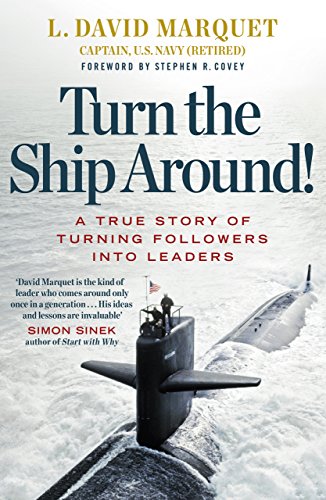
This is the model I keep returning to in these essays, because it keeps proving itself. L. David Marquet’s Turn the Ship Around (Amazon affiliate link) describes the leader-leader alternative to command and control, where the leader’s job is to clear the path so that the people closest to the work can own the decisions. It is the way I have tried to run my own team, where engineers bring decisions framed as I intend to rather than what should I do, and my job is to give that intent room rather than to gate it. Liz Wiseman’s Multipliers (Amazon affiliate link) draws the same line from the opposite side: some leaders make everyone around them smarter and more capable, and some drain the room of judgment by needing to be its source. The first kind serves the team. The second has quietly put me back at the top of the list, usually without noticing.
Serving the team is also the only durable way to get the mission and the recognition you supposedly gave up by deordering them. A team that trusts its leader surfaces problems early, as I argued in You can’t threaten your way to effective engineering, and a team that surfaces problems early delivers things that actually work. Kim Scott’s Radical Candor (Amazon affiliate link) calls the posture care personally, challenge directly, and the order of those two words is not accidental either. The care comes first, and it is what earns you the right to challenge hard without the challenge landing as a threat.
The inversion test
Here is the line I keep on a sticky note, in the version I actually use:
The leader’s job is to serve the team. The team accomplishes the mission. The leader’s own velocity, recognition and preferences come behind both. We stop leading the moment we invert any of these.
That last clause is the useful part, because it turns a values statement into a test you can fail in public. You are not leading because your title says so. You are leading exactly as long as the order holds, and the moment it inverts, whatever you are doing, it is something else.
The hard part is that the inversions are invisible from the inside and obvious from the outside. Nobody decides to put themselves first. The pressure does it for you, one reasonable-looking trade at a time, and the team sees it long before you do. So the test has to be run on observable behavior rather than on intentions.
Some of the signals I have learned to watch for in myself:
- The win and its cost never appear on the same slide. If you can describe the delivery as a success without being able to say honestly what it cost the team, you have stopped counting the part of the ledger that man first is supposed to protect.
- Concerns reach you late and pre-softened, or not at all. When people manage the risk of telling you something, the order has already tipped. I described this dynamic at length in The decision everyone agreed with and no one believed.
- You are the bottleneck and quietly enjoy it. Indispensability feels like importance. It is usually a sign you are serving your own standing rather than the team’s capability.
- The recognition matters to you more than where it lands. Caring that the work is seen is healthy. Caring that you are seen, specifically, is the tell that me has crept up the list.
- Delivery is consistently funded out of the team’s evenings. One crunch is a circumstance. A pattern is a priority order, stated in the only language that does not lie.

On putting myself last
The part of this that gets misread is me, last. It is not martyrdom, and it is not a vow of invisibility. I am not arguing that a leader should be indifferent to recognition, and I would not believe anyone who claimed to be. Recognition is real, it matters, and it compounds into the trust and the latitude that let you do better work next time.
The argument is narrower and, I think, harder. Recognition cannot be the target. The instant you aim at it directly, you corrupt the two things that actually produce it, the same way any metric stops being a good measure the moment it becomes the goal. Put the team first and deliver the mission through them, repeatedly, and the recognition arrives anyway, as a side effect, and it is the durable kind rather than the kind you have to keep manufacturing. Daniel Pink’s Drive (Amazon affiliate link) makes a version of this point about motivation, that the deepest of it is a byproduct of autonomy, mastery and purpose rather than something you can pay for directly. Recognition for a leader works the same way. It is downstream of the order, and the order does not survive being skipped.
I have had the recognition. I have also had the quarter where the project shipped and the team did not survive it, and I know now which of those I would trade away to keep the other. The team accomplishes the mission. My job is to serve the team. Everything I want for myself sits behind both of those, and the day I put it in front, I should expect to be told, gently or otherwise, that I have stopped doing the job.
Man, mission, me. The order is not a slogan but the actual job description.
Take care, Tasos.
Become a DrinkBird Insider
Get an email when there's a new essay on engineering leadership. Recent ones: Conway's Law, the AI bottleneck, psychological safety. Opt out anytime.
Get the newsletter